Small Steps, Sensible Choices, Superior Health.
Food Color Dyes,
Targeted At Children
Search This Site:
Food color dyes make some foods look more appealing. However, when you walk through the supermarket it is easy to pick out which foods are manufactured for children.
They are usually fun shapes, and fun colors to attract the attention of children.
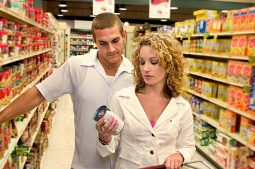
Since these foods are targeted for our children, one would hope they would be healthy choices that please both the parent and the child.
Even though there are many natural coloring agents, or natural food dyes, most companies use artificial food coloring dyes to save money.
U.K. Uses Natural Food Dyes
In the United States companies will use artificial food color dyes in their products, but in the U.K. the same companies will color their products naturally using natural food color dyes.
For example, in America Coca-Cola’s Fanta is colored with Red 40 and Yellow 6.
In the U.K. Fanta is colored with pumpkin and carrot extract.
Likewise, McDonald’s strawberry sundaes are colored with Red 40 in the U.S., whereas in the U.K. real strawberries are used (Common Dreams).
Health Risks of Food Color Dyes
While saving money is fine, there are some significant health effects as a result of the chemistry of food dyes and artificial coloring, especially for the target consumers, our children who will use that food the most.
The artificial food color dyes in food has been shown to have a significant effect on hyperactivity in children, and isn’t restricted to affecting those with ADHD.
In a study that involved 153 three year old children, and 144 eight to nine year olds, researchers found that children given the drink containing sodium benzoate and one of two artificial food color dyes and additives, had a significant effect on the children’s global hyperactivity aggregate (Nordqvist).
This becomes especially problematic in the school performance of children as it bleeds onto children’s abilities to excel in many areas of academic performance.
Schools that have experimented with removing all junk food have seen landmark improvement.
The student behavior and academic performance improved simply by making healthy choices and serving additive-free lunches and snacks.
Fight Back With Your Grocery Dollars
While children may beg and plead for the superbly marketed
additive-filled children’s foods, for their own sake it’s best to avoid
them.
If your regular supermarket doesn’t carry alternative options, health foods stores will often carry children’s foods that are naturally colored with natural food dyes.
And if you use food coloring in your baked goods or frosting, try to use natural food coloring. If your supermarket doesn't carry them, check out India Tree Natural Decorating Colors, 3 bottles(red,yellow,blue) from Amazon.
This way they are getting the visual stimulation of the artificially colored foods without the adverse effects.
With the constantly rising rates of ADHD, we may need to look closer at what is causing this behavior.
If this challenge to our children’s learning can be avoided naturally, by making healthy food choices instead of treatment with harmful drugs, maybe offering alternatives to the favorite cartoon fruit snack is worth it.
Nature also provides some pretty colorful foods especially found in fruits. Whenever possible make healthier choices and choose natural foods.
References:
"Brits Get Treats, Americans Get Tricks From Food Companies, Says Nutrition Action Healthletter."
Common Dreams. 22 Oct 2008. Common Dreams. 24 Jul 2009 .
Nordqvist, Christian. "Childhood Hyperactive Behavior Exacerbated by Food Additives and Artificial Color." Medical News Today (2007)
Additional Resources

NEW & VIEWS SIGN UP
Want more healthy tips on:
- food and drinks
- personal care choices
- household choices
Sign up for my Healthy Choices News and Views. Unsubscribe any time.Get a FREE report called, Just Start Here.... as a thank you. Just fill out form below. Not sure, learn more here.
Recent Articles


-
I stopped using them.
I stopped using artificial sweeteners about 1 year and a half ago when I was diagnosed with Parkinson's two years ago. I thought they would make me lose -
Truvia?
What about Truvia? -
Robert Tomlinson
Love sodas. Drank 2 to 5 a day for years. Dr advised to cut down and lose weight. Switched to diet sodas for 5 yrs until last year. Landed in hospital
New! Comments
Let me know what you think! Please leave me a comment in the box below.