Small Steps, Sensible Choices, Superior Health.
The Facts About Fats and Oils
Search This Site:
Fats and oils are not necessarily bad. However, sorting out which ones are healthy for you and which
are not can be confusing.
There are many types of fats.
We will cover the saturated fats and unsaturated as well as the hydrogenated, trans fats and triglycerides.
One fact is clear, there is overwhelming evidence proving that your body needs fat, "healthy fat".
This page will help you figure out which fats and oils are healthy for you.
How Fats and Oils Help Your Body:

- Provides fuel for a strong heart
- Helps your body process and metabolize fat
- Provides fuel for physical activities
- Boosts your immune system
- Prevents depression
- Controls inflammation in the body
- Building block for strong cells
- Raises the good cholesterol, HDL
- Promotes brain health, focus and clarity
Saturated Fats
Chemically, a fatty acid is considered “saturated” when the all the carbon bonds are linked with a hydrogen atom. They are solid or semi solid when at room temperature. A completely saturated fatty acid is also called a steric acid.
They are usually made up of animal fats and tropical oils (like coconut and palm). The body can also produce saturated fats from carbohydrates.
Saturated fats are a stable fat for cooking as they do not go rancid when heated. They make good fuel for keeping our body warm and building resilient cell membranes.
Many health care professionals will advise against using saturated fats stating they are the cause of cardiovascular disease.
This theory known as the “lipid hypothesis” is usually cited as the basis for this opinion. Before deciding against all saturated fats, you should know, there is the another side to the story.
In fact, there is plenty of scientific evidence that contradicts this theory. Be sure to check out the Additional Resources below to learn about the Framingham Heart Study. The right kind of animal fats are very healthy and beneficial or your health.
Don't cross animal fats off your list just yet. The key is to look for animals that are grass or pasture fed. They typically have less fat, but the fat has some needed health benefits to it.
Unsaturated Fats, Monosaturated and Polyunsaturated
Unsaturated fats have differences in the bonding factors of carbon
molecules and hydrogen atoms. If you're really interested in the
chemical analysis of the different fats and oils there is a lot of
information online.
Monosaturated Fat: An advantage of monosaturated fats is they
tend to be more liquid at room temperature but like saturated fats, they
remain stable during cooking and do not go rancid. Our body actually
makes monosaturated fatty acids from saturated fat.
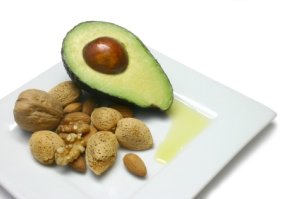
The most common monosaturated fat is oleic acid, which is found is olive oil, avocados and nuts like almonds, pecans, cashews and peanuts.
These are considered a healthy choice for fats and oils and are often recommended by nutritionists.
Polyunsaturated fat:
These fats and oils are always liquid at room temperature.
They include all vegetables oils and no animal fats.
The television commercials promote these oils, like corn, vegetable, soy, canola as good choices for heart health.
But in reality, most of these oils are created by a highly refined process.
Exceptions would be cold pressed vegetable oils that are not refined by heat and chemicals.
Toxic chemicals and high temperatures destroy the vitamins and nutrients and turn them rancid.
They are bleached and deodorized by more caustic chemicals to make them palatable for human consumption.
The refining process creates free radicals which are known to contribute to heart disease, cancer, pre-mature aging, autoimmune diseases and more.
There is also evidence linking polyunsaturated oils (except unheated varieties such as safflower, sunflower and soybean) to the onset of diabetes.
This could be another reason (in addition to excess sugar and grain consumption) that diabetes is so widespread today.
Generally speaking, most polyunsaturated oils are not considered healthy choices for your cooking and eating unless they are non-refined varieties.
Hydrogenated and Partially Hydrogenated Oils
As indicated above, hydrogenation is a process that turns polyunsaturated oils (normally liquid at room temperature) into a fat that is solid at room temperature.
Partially hydrogenated just means the process made the oil “partially saturated” instead of fully saturated. A good example of hydrogenated products are margarine and shortening.
Side note: If you're still undecided in the margarine vs butter debate, be sure to see the Additional Resources below. I think you'd be shocked and instantly switch to butter!
Getting back to the hydrogenation process. Typically manufacturers start with soy, cottonseed, corn or canola oil because they are usually the cheapest. The initial extraction process makes them rancid from the start but then they are mixed with tiny metal particles like nickel oxide.
Next the oil is exposed to hydrogen gas in a high temperature and high pressure process. Then emulsifiers and starches are added to improve the consistency.
The oil must then be cleaned to remove the unpleasant odor and is again subjected to a high temperature cleaning. This intrusive process substantially changes the chemical structure in the fatty acid chain.
I doubt anybody would consider the above process as “natural and healthy” yet people eat and cook with these products everyday.
They are chemically altered, man made fats that are toxic to the body. Hydrogenated oils and fats are not healthy choices for cooking or eating.
In doing my research on healthy fats, I found a great resource and recipe book. It covers all the food groups and gives factual information on which foods are healthy, which are not and why.

This book is like my "kitchen bible", I use it all the time. I would encourage you to consider clicking the image to the right and get a copy.
It's a combination of a fascinating text book that educates you and a huge recipe book to help you feed your family in a healthy and delicious way.
Trans Fats
Trans fats are hydrogenated and partially hydrogenated oils. The molecular structure of the fatty acid is chemically altered rendering it difficult for the body to properly utilize it. They are considered unhealthy fats and oils for the body.
Cooking With Fats and Oils
Make healthy choices when choosing your fats and oils. If you are going to cook with it, make sure you choose a fat or oil suitable for higher temperatures. Unstable fats can become damaged and rancid at heating points of 320 degrees.
Butter and believe it or not, lard (from grass fed animals)are good choices for cooking. When possible, it's better to cook slowly with lower heats like a slow roasting method.
Olive oil (mono-saturated) is a good choice for eating and cooking. In fact you might be surprised at some of the olive oil remedies that many people use.
Coconut oil is a healthy saturated fat and is great for cooking, especially higher heat temperatures. I always cook my popcorn in coconut oil and drizzle it with butter, of course!
I also use coconut oil as my facial moisturizer and in my home-made deodorant. It has so many other uses and benefits.
Choose your cooking fats and oils based your method of cooking. I typically cook and bake with coconut oil, olive oil and butter. I feel they are the healthiest choices of the fats and oils.
Additional Resources
Margarine vs Butter, You May Never Eat Margarine Again

NEW & VIEWS SIGN UP
Want more healthy tips on:
- food and drinks
- personal care choices
- household choices
Sign up for my Healthy Choices News and Views. Unsubscribe any time.Get a FREE report called, Just Start Here.... as a thank you. Just fill out form below. Not sure, learn more here.
Recent Articles


-
I stopped using them.
I stopped using artificial sweeteners about 1 year and a half ago when I was diagnosed with Parkinson's two years ago. I thought they would make me lose -
Truvia?
What about Truvia? -
Robert Tomlinson
Love sodas. Drank 2 to 5 a day for years. Dr advised to cut down and lose weight. Switched to diet sodas for 5 yrs until last year. Landed in hospital
New! Comments
Let me know what you think! Please leave me a comment in the box below.